Laser Cleaning Machine Comparison: 300W–3000W, Pulsed & CW

    Both laser type and power level matter — but neither is the first question. LaserSan recommends machines based on the material, what needs to be removed and what must remain after cleaning.

    This page compares portable air-cooled pulsed systems, higher-power water-cooled pulsed systems and CW machines, supplied across Spain and Europe.

    Quick answers

    Quick answers before you compare

    What is the difference between a 300W and 500W laser cleaner?

    LaserSan 300W and 500W pulsed machines can cover many of the same professional applications. In LaserSan practical tests on the same material and under comparable conditions, approximately 30% higher productivity has been observed with 500W compared with 300W. The 300W can remain the better starting point where 300W is sufficient and mobility or lower initial investment matter. Actual results depend on material, coating, surface condition, laser parameters and required finish.
    What laser cleaner should I choose for wood?

    LaserSan 300 Wood and LaserSan 500 Wood are dedicated configurations for professional paint and varnish removal from wooden surfaces. LaserSan 300 Wood is relevant for controlled cleaning and restoration applications; LaserSan 500 Wood is relevant where larger surfaces or recurring workloads make productivity important. Higher wattage does not automatically produce better results — the correct machine depends on the material, coating and required finish.

    When should I choose a 1000W laser cleaner?

    Higher-power pulsed systems become particularly relevant when surface area, production volume or required processing time makes 300W–500W too slow for the workflow. The choice is driven by surface area, workload and processing time rather than by how difficult the contamination looks.

    What is the difference between pulsed and CW laser cleaning?

    Pulsed laser cleaning generally offers greater process control and lower thermal input. CW is typically selected for robust metallic applications where large-area coverage and throughput are priorities.

    Which LaserSan machines are portable?

    The LS-300 and LS-500, in both Compact and Luggage formats, are portable air-cooled systems. The LS-1000 and LS-2000 are water-cooled and typically used as workshop or semi-fixed machines. CW systems are generally used where suitable infrastructure is available.

    Is higher wattage always better?

    No. Power is only one part of machine selection. Surface control and final result also depend on pulse energy, pulse duration, frequency, process parameters, material, coating and the condition required after cleaning.

    Quick comparison of the LaserSan range

    Where each machine family typically fits. Compact and Luggage versions of the same power share the same cleaning capability; they differ in format, handling and mobility.

    MachineLaser typeCoolingMobilityTypical decision reason
    LS-300 (Compact / Luggage)PulsedAir-cooledHighly portableControlled professional cleaning, mobility and lower initial investment where 300W is sufficient
    LS-500 (Compact / Luggage)PulsedAir-cooled, integrated closed-loop coolant circuitHighly portableMany of the same applications as 300W, with higher productivity under comparable conditions, plus a specialised fiberglass/gelcoat configuration
    LS-1000PulsedWater-cooledWorkshop / semi-fixedHigher throughput where surface area, workload or processing time makes 300W–500W too slow
    LS-2000PulsedWater-cooledWorkshop / semi-fixedLarge-scale pulsed cleaning where processing time and workload are critical
    CW 1500CWAir- or water-cooledSite or workshop with suitable infrastructureRobust metallic applications where large-area coverage and throughput are priorities
    CW 2000 / CW 3000CWWater-cooledWorkshop / industrial installationRobust metallic applications where large-area coverage and throughput are priorities

    ← Swipe to see all columns →

    Suitability always depends on material, coating, surface condition and required finish.

    Standard vs Wood — Which Configuration Makes Sense?

    Our range now includes dedicated 300W and 500W Wood configurations for paint and varnish removal on wooden substrates. The right choice depends first on material, coating and desired finish, then on processing time and mobility.

    What laser cleaning machine should I choose for wood?

    LaserSan now offers dedicated 300W and 500W Wood configurations for professional varnish and paint removal from wooden surfaces. Compared with general-purpose versions, the Wood systems use specialised optics and a wood-focused process. 300 Wood is an attractive choice where portability, controlled work and lower initial investment matter. 500 Wood is particularly relevant for higher workloads and larger surface areas. Both machines are also suitable for selected non-wood work; standard LaserSan models may be faster on other types of contamination. Results must be evaluated for the exact wood, coating and required finish. Power alone does not determine suitability.

    Standard LaserSan 300/500

    Optimised for mixed industrial cleaning, metal, corrosion, surface preparation and suitable coatings; wood may be possible depending on the surface.

    LaserSan 300 Wood & 500 Wood

    Optimised for selected varnishes, paints and coatings on wood; capable on other suitable substrates but not always the fastest alternative outside wood.

    Decision factor: Match the machine to the primary material, coating, finish and operating volume.

    Quick comparison — Wood models

    MachineLaser typeCoolingMobilityTypical decision reason
    LaserSan 300 WoodPulsed, wood-optimisedForced airPortable / 35 kgWood paint/varnish restoration where 300W meets throughput
    LaserSan 500 WoodPulsed, wood-optimisedForced airPortable / 55 kgWood cleaning with larger areas or higher recurring workload

    Reference performance comparison (m²/h)

    Reference testLaserSan 300LaserSan 300 WoodLaserSan 500LaserSan 500 Wood
    Transparent varnish on solid wood, 50 µm0.751.40.91.6
    Coloured varnish on solid wood, 50 µm1.11.51.31.8
    Oil-based paint on solid wood, 150 µm0.40.60.50.8
    Deep corrosion (non-wood test)1.61.82.62.8

    Reference cleaning performance figures are based on product configuration tests. Actual results depend on material, coating thickness, surface condition, cleaning parameters and required finish. These figures are reference values, not guaranteed production rates or independently verified LaserSan test results.

    Wood Series questions

    Is the Wood version only for wooden surfaces?

    No. It is wood-optimised, not wood-only; selected metal, stone, rust and coating applications are possible.

    Will standard 300W and 500W models still work on wood?

    For some applications, yes. Dedicated Wood versions are built for more challenging or recurring wood coating work.

    Are the Wood models faster on every material?

    No. The standard LaserSan models can be more efficient on other contaminant types.

    Is LaserSan 500 Wood always better than LaserSan 300 Wood?

    No. LaserSan 300 Wood can be an effective starting point, depending on workload and budget.

    Explore Wood Cleaning
    Selection method

    How LaserSan selects the right machine

    Choosing the right laser cleaning machine is not simply a question of selecting the highest wattage. Power is not the first decision criterion. We evaluate the application in this order:

    1. Material and substrate

      What is the underlying material?

    2. What needs to be removed

      Rust, paint, oxide, coating, contamination or another layer?

    3. Required remaining surface

      What must remain intact, and what finish is required after cleaning?

    4. Workload and productivity

      Surface area, frequency of use and required processing time.

    5. Mobility and working environment

      Workshop, mobile work, stairs, access, power supply and operating conditions.

    6. Machine power and laser configuration

      Wattage, pulse energy and process parameters are selected after the application requirements are understood.

    What is the difference between 300W and 500W laser cleaning machines?

    LaserSan 300W and 500W pulsed machines can cover many of the same professional applications. In LaserSan practical tests on the same material and under comparable conditions, approximately 30% higher productivity has been observed with 500W compared with 300W.

    Actual results depend on material, coating, surface condition, laser parameters and required finish.
    Is 300W enough for professional laser cleaning?

    The LS-300 is a strong professional option where 300W is sufficient — including applications involving metal and wood, as well as restoration and general maintenance work. It is particularly attractive when mobility, controlled cleaning and lower initial investment are important. Suitability still depends on coating, substrate and required result. Customers working primarily with coated wood should also consider LaserSan 300 Wood.

    When should I choose a 500W laser cleaner?

    The LS-500 covers many of the same applications as the LS-300 and is relevant when higher productivity or a higher workload is expected. LS-500 also has a specialised configuration for certain fiberglass/gelcoat applications. These applications require assessment and practical testing before a cleaning result is confirmed.

    Which laser cleaner is suitable for wood?

    LaserSan 300 Wood and LaserSan 500 Wood are dedicated configurations for professional paint and varnish removal from wooden surfaces. LaserSan 300 Wood is relevant for controlled cleaning and restoration applications; LaserSan 500 Wood is relevant where larger surfaces or recurring workloads make productivity important. Higher wattage does not automatically produce better results — the correct machine depends on the material, coating and required finish.

    When do 1000W and 2000W pulsed lasers make sense?

    Higher-power pulsed systems become particularly relevant when surface area, production volume or required processing time makes 300W–500W too slow for the workflow.

    Both are water-cooled workshop or semi-fixed systems. They are suitable for common industrial metallic substrates depending on surface condition, coating and required result. LS-2000 is the highest-power pulsed machine in the current LaserSan range.

    Coating thickness and contamination level affect cleaning time and parameter selection. Heavier coatings do not automatically mean that the highest-power machine is the correct choice. Substrate sensitivity, required finish and throughput must be considered together.

    Pulsed vs CW laser cleaning: what is the difference?

    Pulsed laser cleaning generally offers greater process control and lower thermal input. CW is typically selected for robust metallic applications where large-area coverage and throughput are priorities.

    Pulsed (300W–2000W)CW (1500W–3000W)
    Energy deliveryShort, controlled energy pulsesContinuous laser output
    Thermal inputTypically lowerTypically higher
    Typically relevant forApplications where selectivity and substrate protection matterRobust metallic surfaces, large-area and high-throughput work
    RangeFrom portable air-cooled systems to higher-power water-cooled systemsCW 1500 (air- or water-cooled), CW 2000 and CW 3000 (water-cooled)

    CW is not automatically the right choice whenever higher throughput is required; material, surface condition and required finish must still be considered. Pulsed cleaning still requires correct parameters to protect the substrate.

    CW reference cleaning performance by application

    ApplicationCW 1500CW 2000CW 3000
    20 μm rust18 m²/h24 m²/h36 m²/h
    20 μm oil24 m²/h32 m²/h48 m²/h
    20 μm paint13.5 m²/h18 m²/h27 m²/h
    Ground / wall surface18 m²/h24 m²/h36 m²/h

    Reference cleaning performance is based on laboratory testing under automatic conditions. Actual performance depends on material, contamination or coating type, layer thickness, selected parameters and operating conditions.

    Air-cooled vs water-cooled laser cleaning machines

    Air-cooled

    • Easier mobility and faster deployment
    • Useful for service work, workshops and on-site tasks
    • LS-300 and LS-500 (Compact and Luggage), CW 1500 air-cooled version

    Water-cooled

    • Typically used in higher-power and sustained industrial setups
    • Greater system size and infrastructure requirement
    • LS-1000, LS-2000, CW 1500 water-cooled version, CW 2000, CW 3000

    Detailed pulsed model comparison

    Key documented data for the pulsed range. Full values are on each product page and in the technical PDFs.

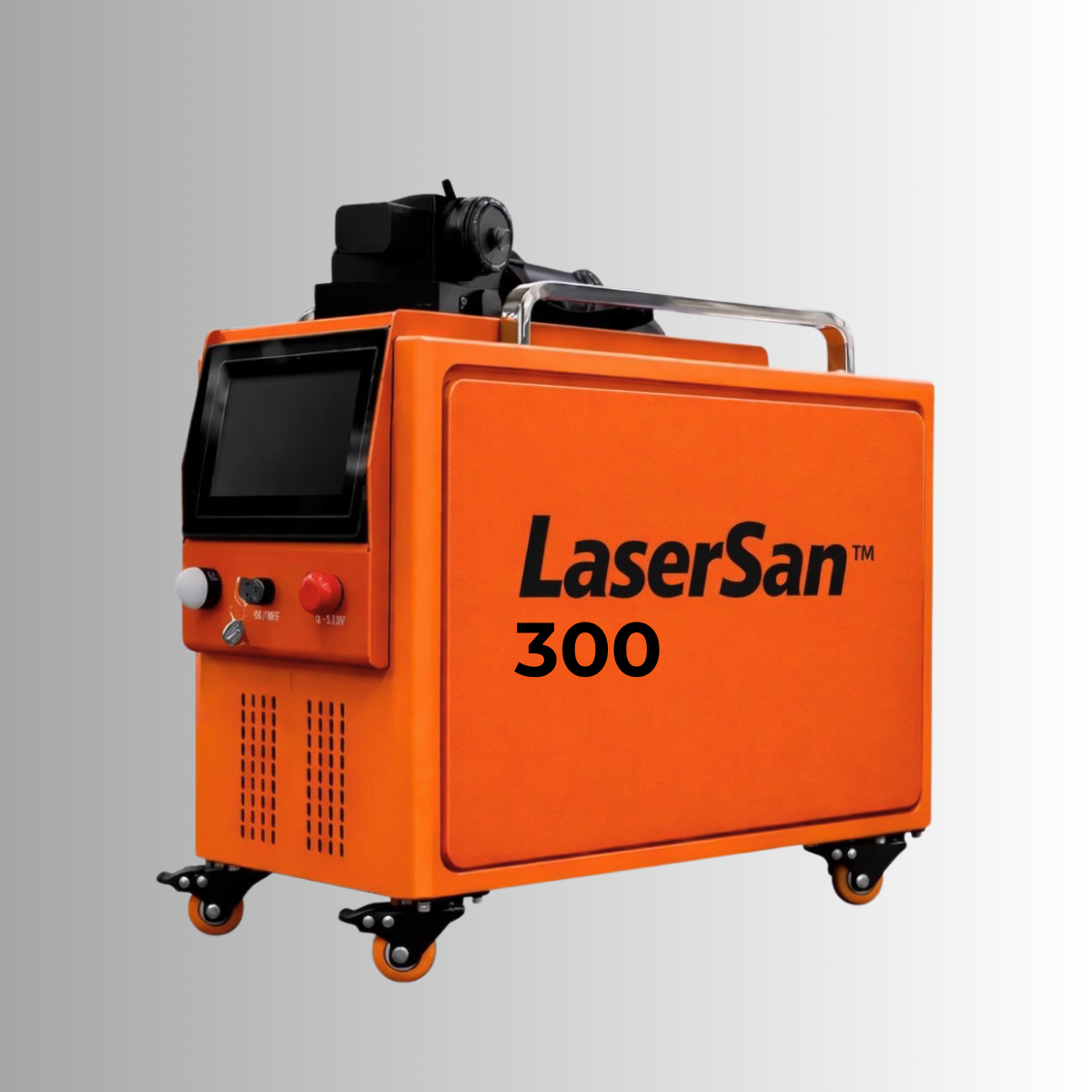
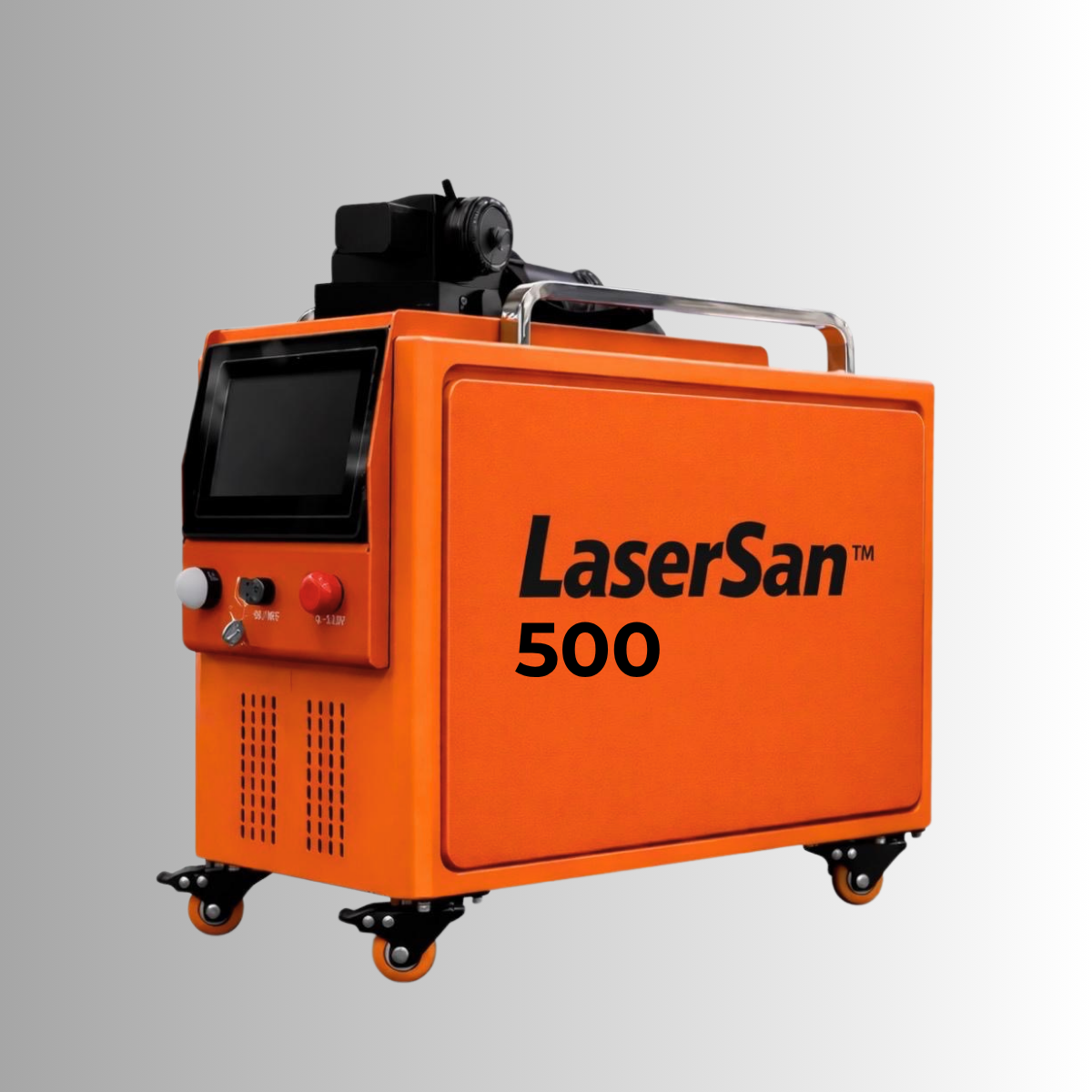
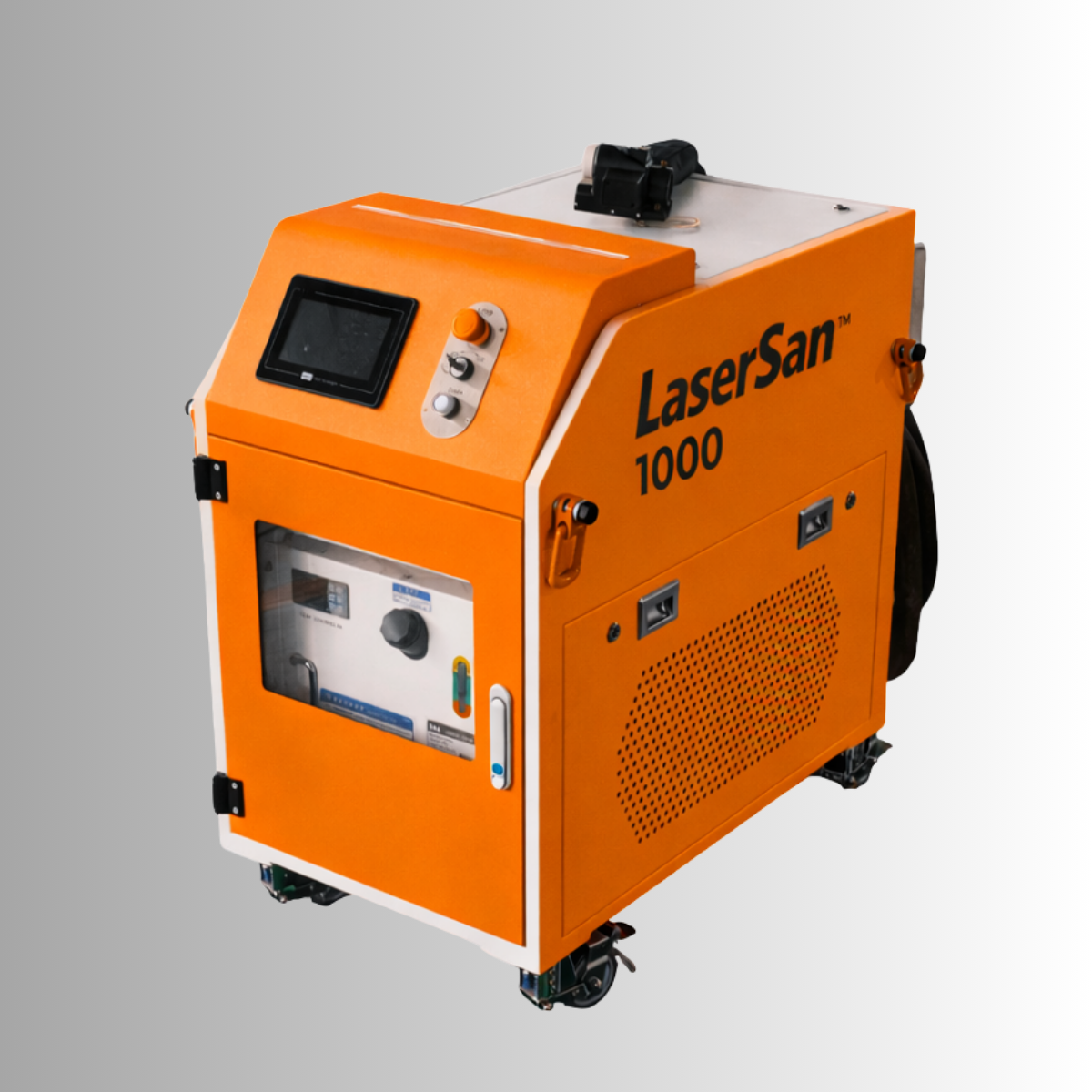
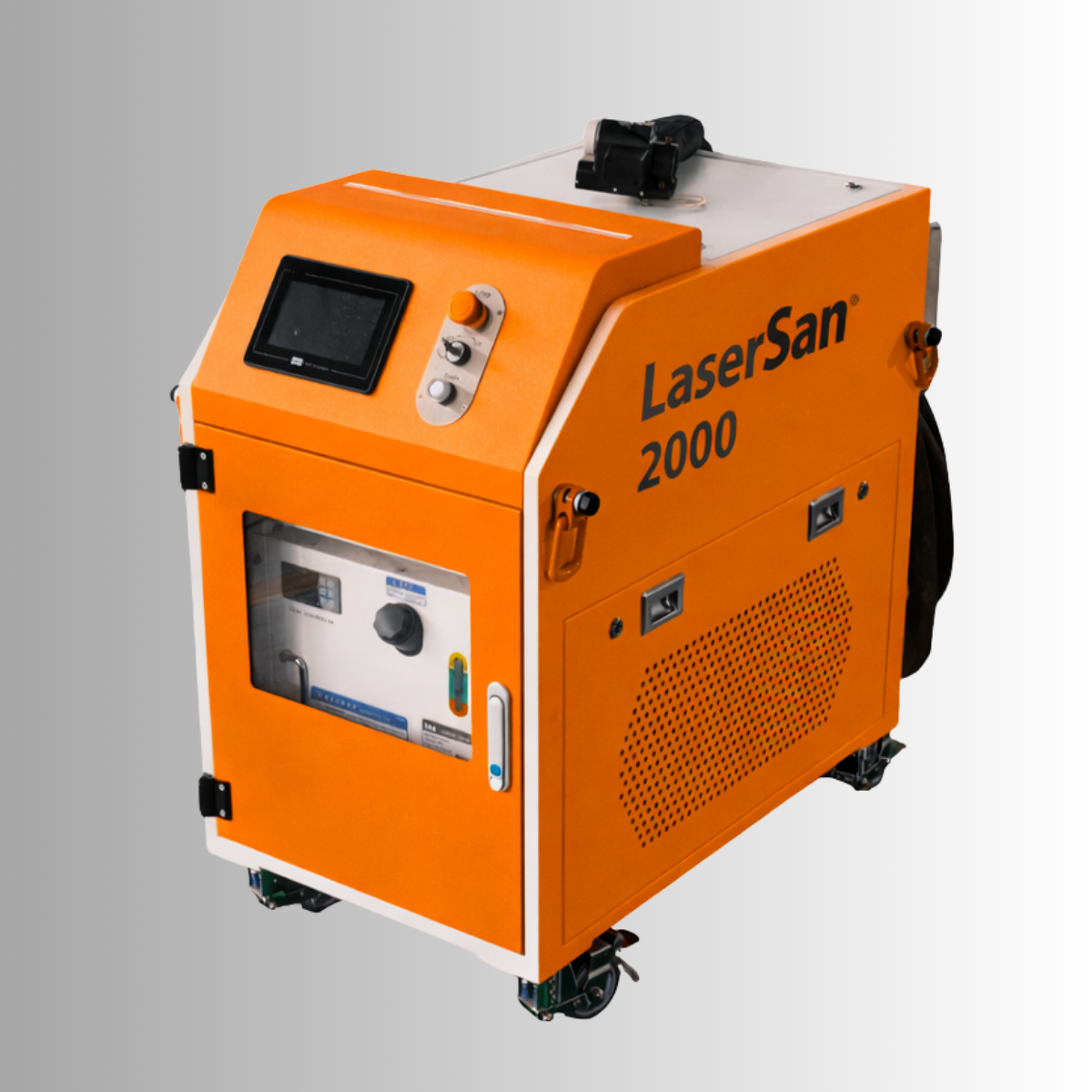
    LaserSan LS-300 pulsed laser cleaning machine, front viewLaserSan LS-500 pulsed laser cleaning machine, front viewLaserSan LS-1000 water-cooled pulsed laser cleaning machine, front viewLaserSan LS-2000 water-cooled pulsed laser cleaning machine, front view
    LS-300LS-500LS-1000LS-2000
    Laser typePulsedPulsedPulsedPulsed
    CoolingAir-cooledAir-cooled, integrated closed-loop coolant circuitWater-cooledWater-cooled
    Weight36 kg (Luggage 35.5 kg)56 kg (Luggage 45 kg)150 kg170 kg
    Power supplyAC 220V / 110V ±10%220V / 13A (110V / 26A optional)220V / 32A or 380V / 21A380V ±10%
    MobilityHighly portableHighly portableWorkshop / semi-fixedWorkshop / semi-fixed
    Typical decision reasonControlled professional cleaning, mobility, lower initial investmentHigher productivity under comparable conditions; fiberglass/gelcoat configurationHigher throughput on larger areas and workloadsLarge-scale pulsed cleaning where processing time is critical

    ← Swipe to see all columns →

    Actual results depend on material, coating, surface condition, laser parameters and required finish.
    Which machine should I start with?

    300W may be the right starting point if:

    • 300W is sufficient for the application
    • Mobility matters
    • Lower initial investment matters
    • Controlled cleaning is a priority

    500W may be relevant if:

    • You need higher productivity
    • You expect a higher workload
    • You want the specialised fiberglass/gelcoat configuration

    1000W / 2000W pulsed may be relevant if:

    • Surface area is large
    • Processing time is critical
    • Workload makes 300W–500W too slow

    CW may be relevant if:

    • You work primarily with robust metallic surfaces
    • You need large-area coverage
    • Throughput is a primary requirement

    Not sure? Send photos or video. LaserSan recommends machines based on the application — not simply the highest wattage.

    Send photos / video for assessment

    Frequently asked questions

    Get a recommendation for your application

    Send photos or video showing the material, what needs to be removed, the finish required and the approximate surface area. We assess the application and recommend a suitable machine.